What if AI approves a fraudulent supplier change because the underlying data is incorrect? More than 60% of fraud attempts occur when requests are made to change supplier details, often long before a payment is made.
AI can identify anomalies faster and automate checks, but only when it has access to complete, up-to-date and reliable data. During a webinar hosted by Altares Dun & Bradstreet, Ivalua and Trustpair, three practical scenarios demonstrated how AI, business data, bank account verification and established workflows work together to detect fraud earlier.

Scenario 1: a suspicious change to supplier details proved legitimate
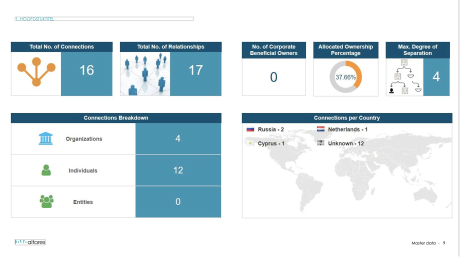
An unknown contact at an existing supplier requested a change to the bank account number for a payment of €350,000. The unfamiliar sender, time pressure and high amount appeared to be clear warning signs. However, the change proved legitimate. Trustpair verified that the bank account belonged to the supplier, Altares Dun & Bradstreet confirmed the legal entity and ownership structure, and Ivalua brought the checks together in the workflow.
In a situation like this, AI can assess multiple signals at the same time. An unknown contact and an unusual amount increase the risk, but verified business and bank details provide the necessary context. This means AI not only helps prevent fraud, but also avoids unnecessarily blocking a legitimate payment.
Interesting read: Is your organization ready for Know Your Supplier excellence?
Scenario 2: telephone verification does not always protect against supplier fraud
In the second scenario, an employee called the telephone number provided in the email requesting a change to the supplier details. The person on the line pretended to be the trusted contact, but the fraudster had inserted the number into the phishing email.
The telephone verification appeared thorough, but it was based on the same unreliable source as the original request. AI can flag that the contact details only appear in the new change request and do not match previously validated supplier data.
Based on this, an independent verification workflow can be launched automatically and the request can be forwarded to another authorised employee. In this way, AI contributes to a more secure process and reduces the risk of employees being misled through social engineering.
Scenario 3: reliable business data reveals a fake supplier
The third scenario involved a new account with a neobank in Ireland. The invoice numbers provided were correct, which made the request appear convincing. However, the underlying data told a different story. Trustpair identified risks related to the new account, while Altares Dun & Bradstreet established that the Irish entity had only been incorporated a few weeks earlier and had no connection to the foreign headquarters. The name appeared almost identical, but the legal identity and ownership structure did not match.
AI can look beyond the company name or the attached invoice. By automatically comparing the registration number, D-U-N-S® Number, incorporation date and ownership structure with the existing supplier profile, it becomes clear that they are not the same entity. The change can then be blocked and referred for further investigation. The fact that the invoice details were correct may also indicate that internal information had been obtained.
Interesting read: Your supplier database is not what you think it is: that could cost you money
How AI can detect supplier fraud earlier
The strength of AI does not lie in a single isolated check, but in combining change requests, historical supplier data, verified business information, ownership structures and bank account verification.
Altares Dun & Bradstreet provides reliable business data and insight into legal entities and ownership structures. Trustpair verifies whether a bank account actually belongs to the supplier. Ivalua brings the checks and follow-up actions together within the procurement process. AI analyses this information and helps determine whether a request can be approved, requires additional verification or should be blocked.
The D&B MCP gives AI applications direct access to up-to-date business data within the decision-making process, making it easier to automate checks and reach well-informed decisions more quickly.
Interesting read: The role of data providers in the AI transition
Reliable AI for procurement starts with reliable supplier data
The three scenarios show that AI only adds real value when it has access to reliable data and the right checks. Only then can it distinguish a legitimate change from fraud, identify unreliable information and detect unusual entities in time.
Organisations looking to use AI within procurement and finance should therefore start with complete, up-to-date and independently verified supplier data. During a AI strategy session, we assess how you can combine business data, processes and AI applications to identify supplier risks earlier and make better-informed decisions.